I've often heard people express the fact that I'm gifted at languages. I am not. Here's how I actually learn.
I've often heard people (usually people I work with) express the fact that I'm gifted at languages. I am not (blog soon coming up about this!).
I have to work hard to learn a language. What makes it seem like I'm "gifted" is that I'm a language nerd. I love languages, I love words, I love discovering more about the culture, I love connecting with people on a whole other level.
Step 1 - Learn the alphabet first
The first thing I did was to learn the Greek alphabet before my trip to Greece (in 2020). When I got there, I mean the minute I got off the plane, I felt like I was 5 again, trying to read every word around me. It was like trying to figure out a puzzle and I loved it (I also quickly realized knowing the alphabet was not enough, but it was a step in the right direction).
Step 2 - Use the menu as your teacher
My second step was to ask for a menu in Greek, so I could compare it with the Latin letters from the menu in English. I didn't look at everything, but I'd choose something on the English menu and then find it on the Greek menu and try to figure out how to say it. Food always motivates me ;-)
Step 3 - Find the words you already know
The third step, which was not a conscious decision but random observations, was to realize that I already knew some Greek words… just from speaking French and English. Check out these 2 examples:
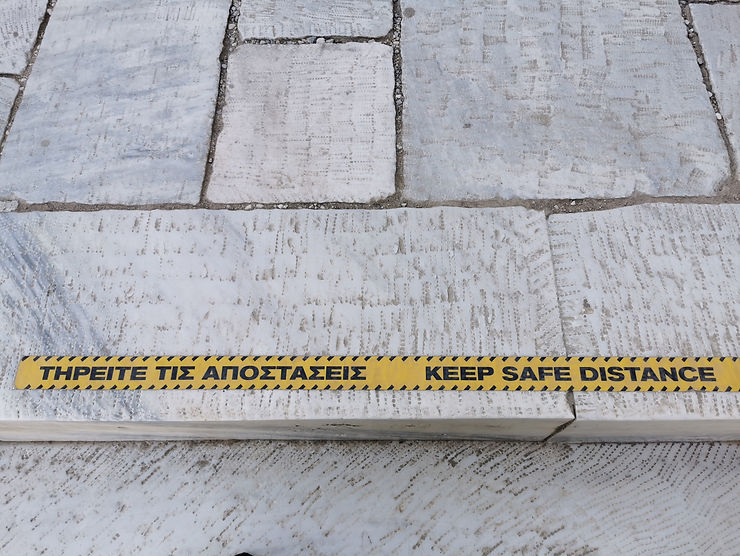
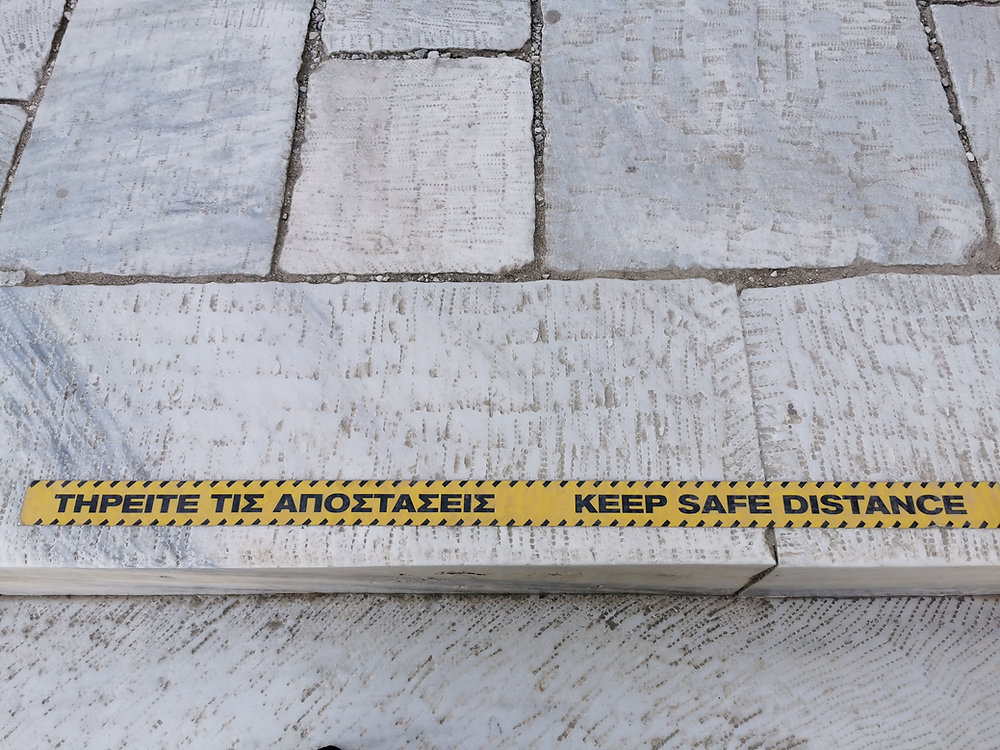
ΑΠΟΣΤΆΣΕΙΣ (reads: apostaseis) means "distance". In English, an apostate is someone who distances themselves from their religion (formal definition: "a defection or revolt").
This is a step by the Parthenon, check the 3rd word in Greek and in English.
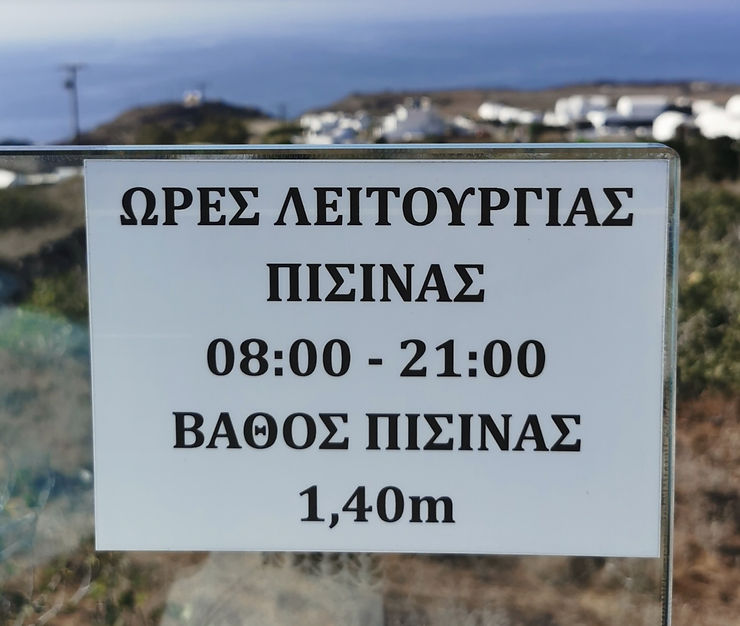
ΠΙΣΊΝΑ (reads: PISINA) means swimming pool, which is piscine in French and piscina in Spanish.
And here: check out the 3rd word.
More generally speaking, when talking about math, science, philosophy, you use a lot of words that come from Greek.
Step 4 - Find your thing

I downloaded an app called Language Transfer (it's free and I really love the method, languagetransfer.org). It helped me understand a bit more about how the language is built, among other things. I didn't do it every day mind you, I still have a long long way to go, I didn't have any specific goal in learning Greek other than curiosity and my love of languages.
I also focused on how my friends spoke when speaking in Greek. I listened to the pronunciation, I tried to catch every word I could. I familiarized myself with the "music" of this beautiful language. I noticed I could say every sound, there were no harsh or difficult sounds to pronounce. I also noticed the CH and SH sounds don't exist!
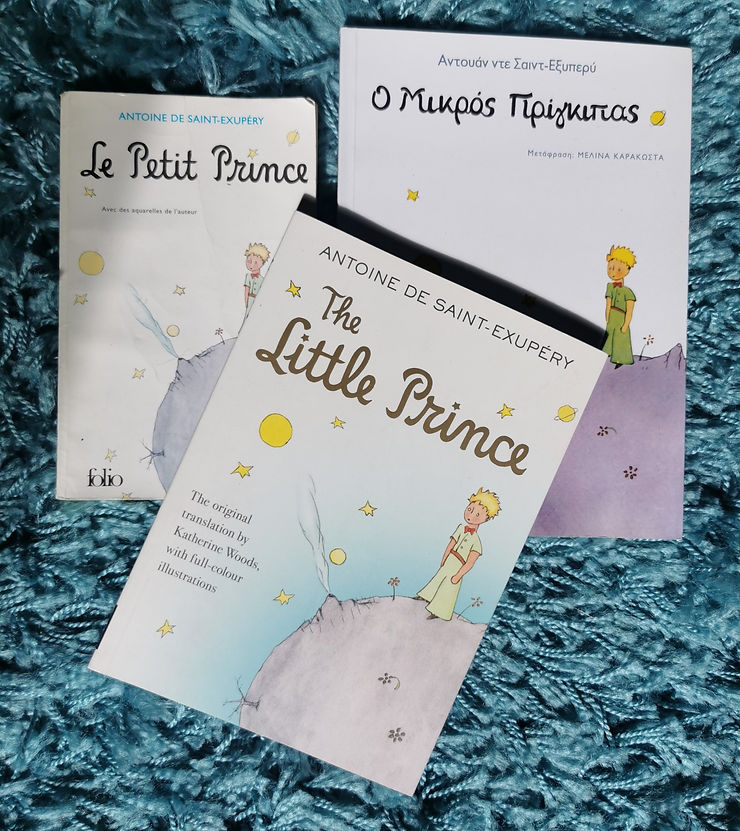
I came back from this first trip to Greece with amazing images of Paros, Santorini, Athens and memories of wonderful moments spent with exceptional new friends, but also with Le Petit Prince in Greek (which I collect in many different languages). And sometimes, I open a random page and decipher a sentence and then look for it in English or French.
I told you from the beginning: I'm a language nerd :-)
And last, but certainly not least, I listen to Greek radio on a very regular basis! While I was there, my friend Elli took us on a road trip and the radio that was on played some really good music. It's now part of my life.
Did I ever study Greek grammar? No! Do I speak Greek yet? Not even close! But Greek is not a big mystery to me anymore. What I mean by that is that Greek is now a "normal" language. I can recognize it when I hear it. I distinguish words and not just sounds. The music of it is familiar to me.
So what?
Do I learn all languages this way? Not entirely. With Spanish for example, I love the music, so I use songs a lot. There are some amazing series, so I use series.
See where I'm going with that? Find YOUR thing, make learning the language something you enjoy and that can fit in your life seamlessly.
If you're not sure how to do that, you can contact me for coaching sessions, or just for a 30-minute chat on what you can do to learn on your own like I do. I'm always happy to help.
Καλή σου μέρα! (kali sou mera, have a nice day!)