
Why can you remember a song you haven't heard in years but forget the word you studied yesterday? Let's explore what music does to the brain, how it can support language learning, and how I use it to shift mood, motivation, and confidence.

“Music gives a soul to the universe, Wings to the mind, Flight to the imagination, and life to everything.”
Plato
A few years ago, I was in a frozen food store with music playing in the background, checking out all the yummy stuff I could choose from, when I caught myself singing. Whisper-singing, to be precise (the store was empty!).
♫ ♫ “I know your eyes in the morning sun, I feel you touch me in the pouring rain, And the moment that you wander far from me, I wanna feel you in my arms again (...) How deep is your love, how deep is your love, I really mean to learn, 'Cause we're living in a world of fools, Breaking us down, when they all should let us be, We belong to you and me…”♫ ♫
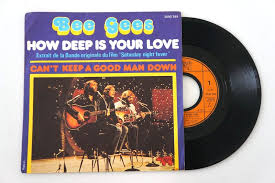
The song was How Deep Is Your Love by the Bee Gees. I hadn't heard it in a very, very long time, at least as far as I was aware, and yet there I was singing along. I knew the lyrics. If you'd asked me five minutes earlier whether I did, I would have said, No.
And yet, there they were, apparently imprinted somewhere in my brain. Why remember that and not much more useful information?
What fascinated me even more was that it wasn't a song I particularly liked. One might even say I used to dislike it. So what gives? Had I heard it a lot before a certain age? Had I picked up little reminders over the years without noticing? Had the melody kept the words accessible in a way ordinary information often isn't?
I went home, googled and YouTubed “music and the brain” and “the neuroscience of music,” and immediately discovered I'd opened a rather large rabbit hole. So much information. Oh. My. God.
Here's the condensed version, plus the part that interests me most: what all of this means when you're learning a language, or simply trying to shift your own state of mind.
Music doesn't live in one little corner of the brain
For a long time, people often summarized music as a “right-brain” activity. The reality is much more interesting. Listening to and making music recruits distributed networks across the brain, including systems involved in hearing, movement, prediction, memory, emotion, and reward.
Three things I find particularly fascinating:
-
Rhythm. You know when you drum your fingers, tap your foot, or bob your head to the beat even though you were originally sitting perfectly still? Rhythm links what you hear with motor systems involved in timing and movement. Your brain isn't simply receiving sound. It's predicting, organizing, and sometimes preparing your body to move with it.
-
Reward. The striatum, part of the basal ganglia, plays an important role in reward and anticipation. In a well-known brain-imaging study, researchers found dopamine release not only during intensely pleasurable musical moments, but also during the anticipation leading up to them. In other words, your brain can start responding before the musical peak actually arrives. That's part of what makes the build-up to a chorus, solo, or favorite passage so satisfying.
-
Emotion and memory. The hippocampus plays an important role in forming and retrieving memories, while the amygdala contributes to emotional processing. Music can become strongly linked with autobiographical memories, places, people, and periods of our lives. That's probably closer to what was happening to me in that frozen food aisle: the song wasn't sitting in a neat little “Bee Gees folder” in my head. Melody, words, familiarity, emotion, and repeated exposure had become connected over time.
And this is where music becomes particularly interesting for learning. Music gives the brain patterns to predict, sounds to distinguish, emotion to attach to them, and memories to retrieve later. That's quite a combination.
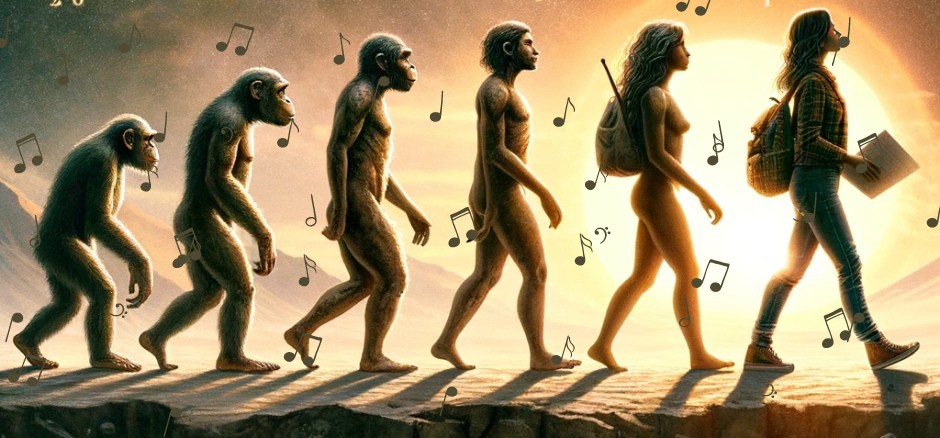
“Around 4.4 million years ago, an Australopithecine named "Ardi" began standing on her legs and walking, marking a crucial moment in human evolution. Since then, the rhythmic pattern of walking has deeply influenced human music. Beyond mere coincidence, the act of taking those first steps set humanity on a trajectory that forged connections between the brain, muscular activity, and the creation of sound.”
Music’s power over your brain, explained by Michael Spitzer
So, can music actually help you learn a language?
First came music, then came language. Both are forms of communication that use sound, patterns, timing, and rules to convey meaning and emotion. They aren't the same system, of course, but they do overlap in some of the abilities they ask from us: attention, auditory discrimination, memory, prediction, and pattern recognition.
If you've studied music, there's evidence that musical abilities and training can be associated with advantages in aspects of second-language speech perception and pronunciation. One study, for example, found that musical abilities predicted how well participants could imitate an unfamiliar foreign accent, and the authors suggested that singing and musical training may support pronunciation learning.
How about those of us who haven't studied music beyond what we did in school or a few piano lessons?
The good news is that you don't need to be a musician to make music useful. Music can make language practice more enjoyable, help you pay closer attention to sound and rhythm, and give you material you're genuinely motivated to return to. And what you willingly return to gets more practice than what you avoid.
There's another practical piece here. Learning is harder when anxiety is high and attention is scattered. Music isn't a magic switch that makes stress disappear, and research on its physiological effects isn't identical across every person or situation, but listening to music you enjoy can support stress recovery and emotion regulation. If it helps you feel calmer, more curious, or simply more willing to engage with the language, that matters.
Two ways I use music for language learning
It's not an either/or situation. These two modes complement each other.
1. Listen in a focused mode
Listen to music in your target language and pay attention to the lyrics, melody, and rhythm.
Read the lyrics and note any unfamiliar words, phrases, or expressions. Look them up, or ask someone who speaks the language fluently for help. You can compare the lyrics with a translation and notice where meaning, structure, or style changes.
Singing along can also be a really good way to work on pronunciation, intonation, and fluency because you're repeatedly producing sounds inside an existing rhythm. Don't worry, no one is listening to you. Belt it out!
That's how I learned Spanish once upon a time. There was a song I loved, I got the lyrics, sang along, learned them by heart (I was listening to it all the time), looked up the words, and learned some verb tenses along the way.
Still today, music is my first source for improving my Spanish. I might not have time to read or watch a series (which I also do when I have the time), but I always have time to listen to music. Always.
And because songs carry pronunciation, rhythm, vocabulary, grammar, and culture together, you're not studying isolated words. You're hearing language inhabited by a voice.
2. Listen in a more diffused mode
This one needs a small distinction. Having music in the background isn't the same as deliberately learning from it, and your brain won't magically absorb vocabulary just because a Spanish song happens to be playing while you're answering emails.
Still, repeated exposure can make sounds, voices, words, and musical phrases more familiar. You may notice a line later because you've heard its shape before, or become curious enough to look something up. That's exactly what seems to have happened with my Bee Gees moment: I couldn't tell you where all those repetitions had come from, but repetition had clearly happened.
You can experiment with different genres, artists, and songs and see what keeps you connected to the language. Remember, enjoyment is key.
I also use music for something less academic and just as useful: association. After a stressful meeting in English, for example, listening to an English-language song you love can stop the language from becoming associated only with pressure, performance, and Did I make a mistake?
I'm aware that not everyone can do the whole “background music” thing. I know that when I'm tired, I have no energy, and procrastination is seriously in the air, I put on music that makes me happy and gives me energy. I try to choose something in a language I'm learning. Or not! Sometimes music gets to be just music.
Singing brings music and language together
Singing sits right at the intersection of music and language, which is one reason I find it so interesting.
For language learning, singing encourages you to imitate articulation, vowels, consonants, stress, timing, and intonation. You get repetition without repeating the same textbook sentence twenty times, which already gives it a fairly strong competitive advantage in my book.
Singing can also be social. Research on group singing has reported changes in stress-related measures such as cortisol, although the direction and size of those changes depend on context. Singing casually with a group isn't physiologically identical to performing in front of an audience, for obvious reasons. Research on oxytocin and social bonding is interesting too, but again, it's more nuanced than “sing and your brain releases the bonding hormone.”
The takeaway I find more useful is simpler: singing combines breathing, sound, memory, movement, emotion, and often connection with other people. No wonder it feels different from quietly memorizing a vocabulary list.
And who says no to fun?
Music as a self-coaching companion
I use songs all the time in my coaching. The other day, a coachee asked me how to say enfin! in English and I immediately belted out At Last by Etta James. I couldn't help myself. Then we watched a YouTube video of the song with the lyrics. My coachee was so happy. She said, “Of course I know this song, I love it. I'll never forget how to say ‘at last.’”
And that's exactly why I love bringing music into a session when the opportunity appears naturally. At last stopped being just a translation of enfin. For her, it was now connected to a song she already knew and loved, plus the moment we'd just shared. That's a much richer association than a word sitting alone on a vocabulary list.
Music is deeply connected to our emotions. It can uplift us when we're down, soothe us when we're anxious, or give us somewhere to put an emotion we don't quite know what to do with yet. Music can become one of the tools you consciously use to notice and shift your state.
Sometimes that means emotional release: choosing music that mirrors what you're feeling instead of immediately trying to escape it.
Sometimes it means stress reduction: putting on music you find calming, breathing, and giving your attention somewhere else for a few minutes.
Sometimes it means mood transformation: choosing something you already know makes you happy or gives you energy. And sometimes, if you're wound up, calming music might help. Or a heavy metal song with a punching bag? You know yourself better than I do.
You can also create playlists for different moods or activities, listen actively instead of always treating music as wallpaper, sing in the car or the shower, make musical memories with your kids, or join a choir or singing group.
I have one song that works as a personal soundtrack: I Am What I Am by Gloria Gaynor. When I'm a little down, or in the midst of doubts and questions about my life choices (as happens to all of us sometimes), that song makes me feel better.
Because over time I've attached something to that song: identity, reassurance, energy, memory. I know what it does for me, so I can choose it deliberately.
Back to the frozen food aisle
I started with a Bee Gees song I didn't even realize I knew.
What I love about that little moment is that it contains almost everything that makes music interesting to me: memory without deliberate memorization, rhythm, language, prediction, emotion, repetition, and a very surprised woman standing next to frozen vegetables wondering why her brain had kept that.
Music won't teach you a language on its own. It won't automatically make you happier, erase anxiety, or “rewire your brain” because you listened to the right playlist. What it can do is give you another way into attention, memory, pronunciation, emotion, motivation, and connection.
And those are pretty useful doors to have open when you're learning a language.
So now I have to ask: what's the song your brain seems to have kept forever, and what's your personal soundtrack when you need to shift your mood?
If you'd like to explore how you learn, what helps you stay engaged, and what gets in your way, contact me for a discovery session.