
Food does more than feed us. It supports the brain we learn with, carries memories and culture, and gives language learners a delicious way to understand how words really live in context, from restaurant menus to unforgettable translation mistakes.
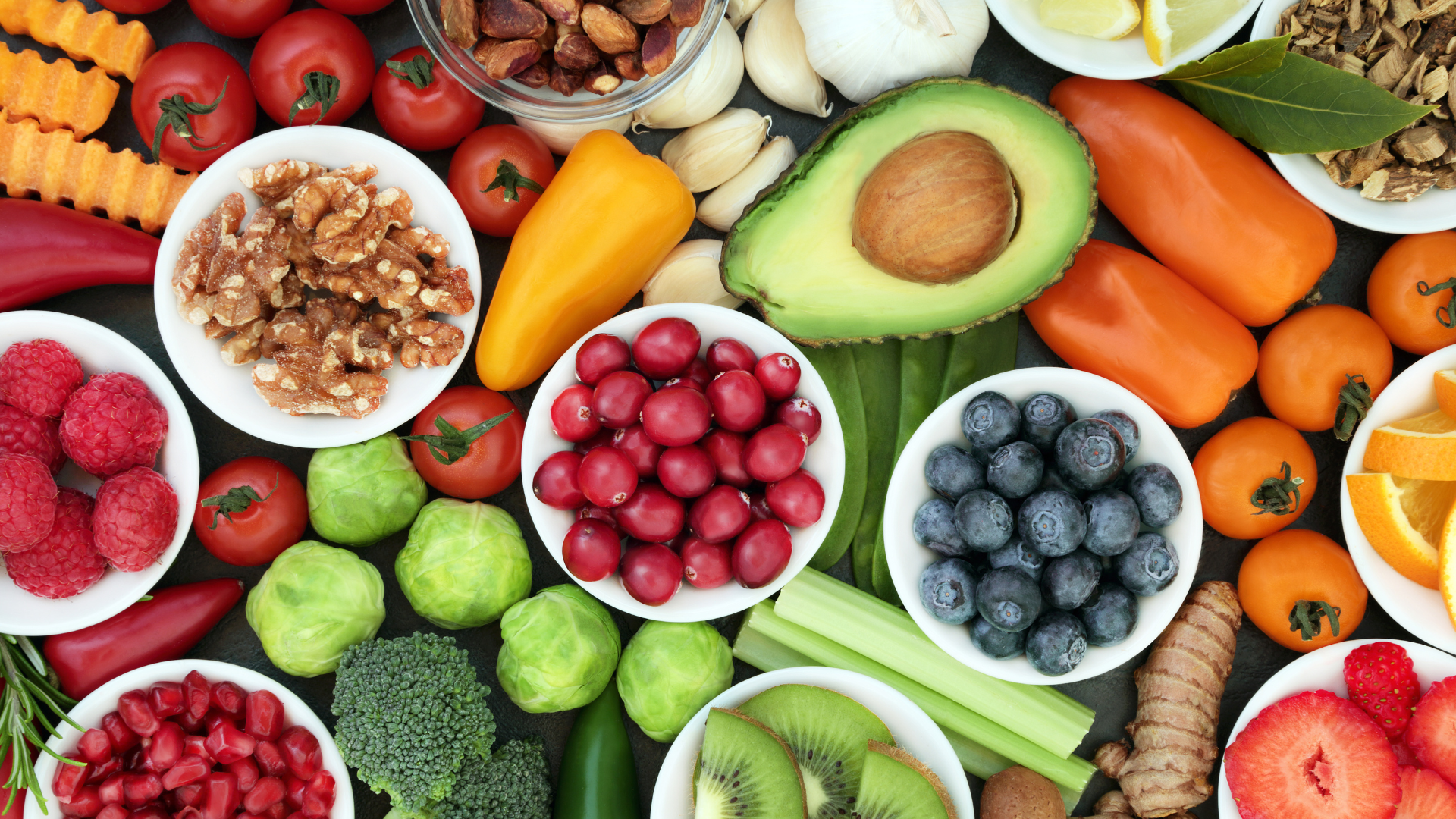
“One can’t think well, love well, sleep well, if one has not dined well.”
— Virginia Woolf, A Room of One’s Own
I watched a lot of videos, verified the studies, read articles, checked the sources.
And now I can safely say: eat these foods and you’ll be bilingual in no time!!
More seriously, there is good evidence that what we eat matters for brain health. The science is much stronger when we look at overall dietary patterns than when we turn one avocado, walnut, or square of dark chocolate into a miracle food.
And food does more than feed the brain. It carries language, memory, culture, habits, stories, misunderstandings (I have one involving a cortado), and some wonderfully confusing vocabulary.
So let’s look at food from two angles that are very closely connected: the brain we learn with, and the language and culture we learn through food.
Food and the brain: what is actually on the menu?
There’s no single food that will suddenly make your memory spectacular or help irregular verbs settle permanently into your brain. Sorry.
What research does support is the idea that diet contributes to brain health through a combination of fats, proteins, carbohydrates, vitamins, minerals, and plant compounds. Studies of dietary patterns, particularly Mediterranean-style diets rich in vegetables, fruits, legumes, whole grains, nuts, olive oil, and fish, suggest benefits for some aspects of cognition and brain health, although individual trials don’t all show the same degree of benefit.
That makes the list below useful, but not magical. And sigh of relief: thank God this list doesn’t include Brussels sprouts!
Fats (lipids)
Avocados and olive oil are rich in monounsaturated fats. They are part of dietary patterns associated with cardiovascular health, and healthy blood vessels matter to the brain too.
Wild salmon and sardines are high in omega-3 fatty acids, including DHA. DHA is an important structural component of brain cell membranes. Research on omega-3 supplements and cognition is mixed, so I’d not tell you that salmon will improve your memory overnight, but oily fish absolutely belongs in the conversation about a brain-friendly diet.
Walnuts contain polyunsaturated fats, including the plant omega-3 ALA, as well as antioxidants and other nutrients.
And yes, dark chocolate gets to stay on the list. Cocoa contains flavanols, plant compounds that have been studied for their effects on blood flow and some aspects of cognition. That doesn’t turn a chocolate bar into medication, unfortunately (I checked).
Proteins and amino acids
Eggs provide choline, which your body uses to make acetylcholine, a neurotransmitter involved in memory and other nervous-system functions.
Beans, tofu, nuts, fish, meat, and other protein sources provide amino acids, the building blocks your body uses for many things, including the production of neurotransmitters.
So when we talk about food affecting mood, attentiveness, sleep, or cognition, we’re not talking about one neat cause-and-effect chain. The brain is far too complicated for that. We’re talking about nutrition as one of the things that supports the systems your brain relies on.
Micronutrients and plant compounds
Blueberries and purple grapes contain anthocyanins, a family of polyphenols. Some human studies have found benefits for certain memory or executive-function measures, while reviews also point out that results vary depending on the population, dose, and test used. In other words: promising, not magic.
Broccoli, spinach, kale, and other green vegetables bring a mixture of vitamins, minerals, fiber, and plant compounds. Rather than assigning one vegetable one cognitive superpower, I prefer the less glamorous but more accurate conclusion: eating a variety of vegetables is part of the dietary pattern consistently associated with better long-term health.
Turmeric contains curcumin, which has anti-inflammatory and antioxidant properties. Research continues into its possible effects on the brain, but I’d keep the claim modest.
Green tea contains catechins, caffeine, and L-theanine. Research suggests that these compounds may influence attention, memory, and some aspects of brain function. Again, the cup of tea isn’t doing all the work by itself.
Nuts and seeds, including almonds and sunflower seeds, provide vitamin E along with fats, fiber, minerals, and other nutrients.
And what about glucose?
Glucose is a major fuel for the brain, and the brain depends heavily on a continuous energy supply.
That doesn’t mean “the brain needs sugar, therefore eat more sugar.”
Fruits, vegetables, legumes, and whole grains provide carbohydrates together with fiber and nutrients, and they fit very differently into a diet than a pile of refined sweets.
One study I found particularly interesting looked at the relationship between diet and the hippocampus, a part of the brain that plays an important role in learning and memory.
The researchers found that people who followed a healthier dietary pattern tended to have a larger left hippocampal volume than those whose diets were closer to a typical Western pattern.
Now, before we start eating kale in the hope of growing enormous hippocampi, a larger hippocampus does not simply mean “better memory.” The study also can’t prove that diet caused the difference.
What it suggests is that the way we eat may be one of the factors associated with maintaining the health and structure of a brain region we rely on when we learn and remember things.
Which brings me back to language learning: the food on your plate isn’t teaching you vocabulary, but it’s feeding the brain that has to learn it.
I’m telling you, what you eat can affect your language learning. Not because blueberries contain irregular verbs, but because language learning depends on the same brain that depends on sleep, movement, blood flow, energy, and nutrition.

Food is more than just a means of subsistence
Food can tell you an extraordinary amount about a culture.
To what extent can the history and culture of France and the USA be told by the fact that the French go to restaurants to eat raw meat, steak tartare, whereas Americans have decided to eat a similar piece of meat, but well-cooked and in a bun, a hamburger?
Or cheese.
Why do the French revel in foods that smell as strong as some cheeses, while Americans tend to prefer much milder ones? (Mind you, I do have French friends who can’t stand cheese and American friends who love Roquefort and Camembert!)
Obviously, these are generalizations. But that is precisely what makes food interesting when you learn a language. It gives you a way into habits, preferences, rituals, vocabulary, and all the little cultural assumptions people rarely explain because, to them, they are completely normal.
A restaurant menu is actually a perfect example.
In France, menu usually means a fixed-price meal with a limited number of choices. If you want what an American would call the menu, you ask for la carte.
French restaurants are used to tourists, so nobody is going to throw you out for asking for le menu. Still, if you want to sound a little more local, now you know the lingo: la carte, s’il vous plaît.
And then things get even more interesting.
Take the word entrée.
In France, an entrée is the starter. In the U.S., an entrée is the main course.
Same word. Same restaurant context. Completely different place in the meal.
That’s language learning in miniature.
You can know the dictionary definition of a word and still not really know how people use it.
The same thing happens with an amuse-bouche (or amuse-gueule), those succulent little bite-sized pieces of heaven that sometimes arrive courtesy of the chef. Apart from getting something delicious, you also get two wonderfully useful French words: amuse and bouche (or gueule, if you’re feeling less formal).
Or side dish.
On an American menu, choosing a side dish is completely normal. In France, vegetables, fries, or other accompagnements generally arrive with the main dish rather than being presented as a separate category in quite the same way.
Even dessert gives you something to play with. Same spelling in French and English, very different pronunciation.
Learning the language around food therefore teaches you much more than vocabulary. It teaches you how a culture organizes the experience itself.
Lost in translation
And sometimes, of course, you just get it wrong.
I remember a couple of years ago in Spain ordering coffee. Easy enough, you’d think.
Except that when I asked what they had besides espresso and café con leche, the waitress gave me a couple of options, including a cortado.
Corto means short, so I decided that a cortado must be what we call in French a “tight” coffee, un café serré. And that’s what I ordered for my partner because he relied on me as the Spanish-language authority (back then, haha).
The cortado arrives.
There’s milk in it.
So I say in my splendidly impressive Spanish, “We ordered a cortado, not a small coffee with milk.”
The waitress looks completely confused.
“This is what a cortado is.”
And of course she was right.
Cortado comes from cortar, to cut. A cortado is an espresso “cut” with milk.
Which makes perfect sense when you actually know the word.
I, for some reason, had simply decided that cortado and corto were the same thing.
That little coffee taught me something much more useful than a vocabulary list ever could: words live inside a culture and a context. You can’t always translate your way into understanding them.
And food gives you endless opportunities to discover that.
Travel and taste are intimately linked too. Have you ever vacationed in France? Just a simple croissant with coffee can transport you back to Paris. Picture yourself enjoying breakfast on a terrace, people-watching.
Meanwhile, toasting a bagel and spreading cream cheese on it always takes me straight back to New York.
Brain newsflash (I can’t help it): when several senses are involved in an experience, the brain has more cues connected to that memory. Smell and taste can be especially powerful triggers for autobiographical memories.
Which means that the meal, the conversation, the waiter, the smell of coffee, the word you misunderstood, and the slightly embarrassing exchange that followed can all become part of the memory.
And suddenly you’re not memorizing cortado anymore.
You know it.
Food can support the brain that learns, but it can also make language learning richer because food isn’t just vocabulary.
It’s memory, culture, social rules, pronunciation, translation traps, habits, and sometimes an unexpectedly educational cup of coffee.
I enjoyed writing about food because, frankly, I enjoy food. That made this one easy.
And now I’m curious: what food, dish, smell, or restaurant experience immediately transports you into another language or another place?