A brief and simplified overview of the brain and a quick zoom on the parts that are most interesting in language learning situations.
If you have no idea what this title means, you're in the right place and this article is made for you.
Here's a (very) brief and (very) simplified overview of the brain and a quick zoom on the parts of the brain that are most interesting in language learning (and speaking!) situations.
The more aware you are of how your brain reacts to situations, the better you can "hack" it to:
- learn better (and possibly faster),
- manage and rationalize stressful situations (when you have to speak the language and things don't go the way you wish or imagine).
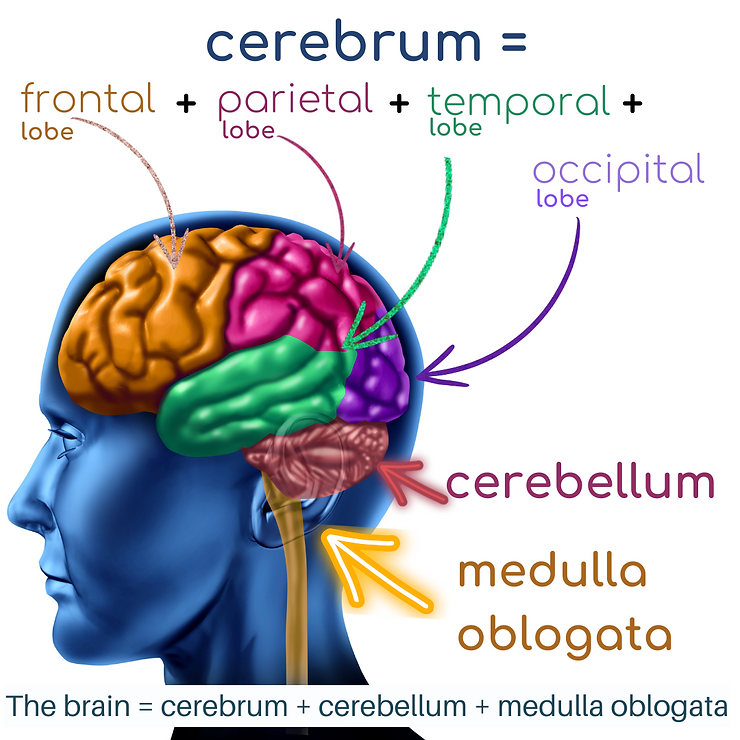
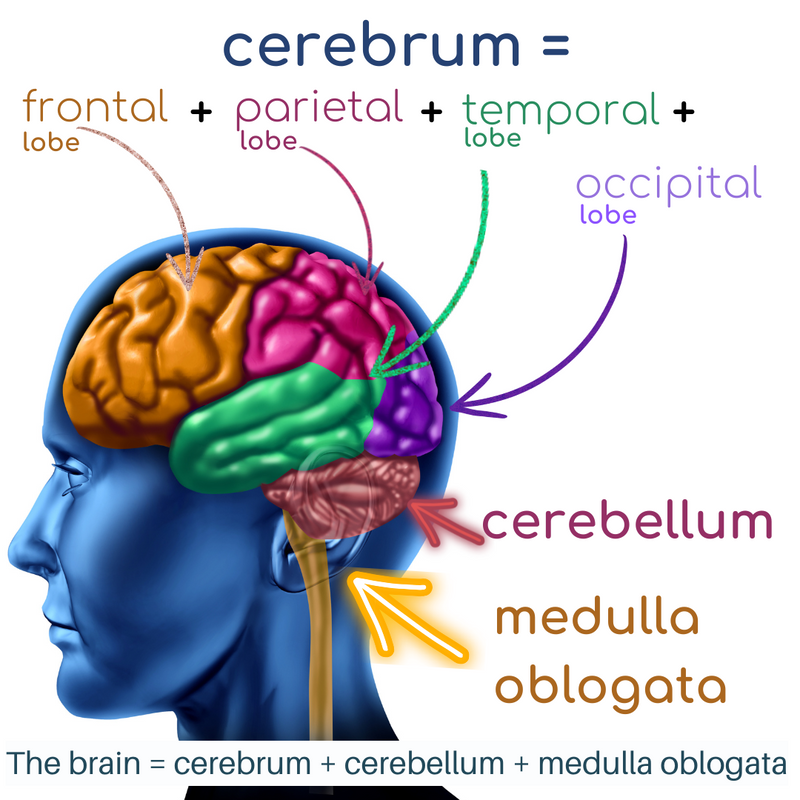
The brain is made up of 3 parts:
- the cerebrum (learning, memory, interpretation, personality)
- the cerebellum (movement, balance, coordination)
- the medulla oblongata (breathing and blood pressure)
The cerebrum is made up of 2 hemispheres, each made up of 4 parts: the frontal lobe, the temporal lobe, the parietal lobe, the occipital lobe.
Zooming in: The Prefrontal Cortex (PFC)
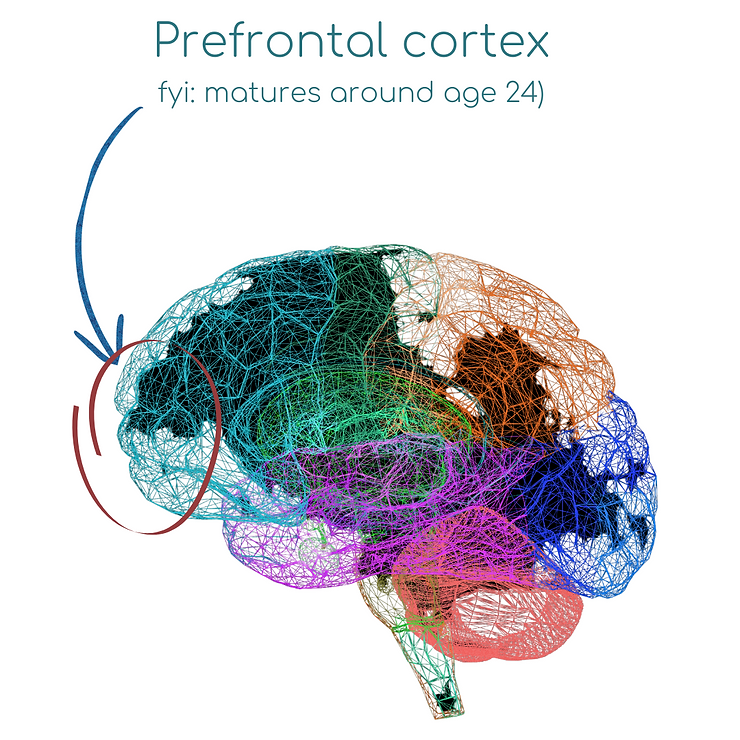
The PFC is one of the last brain regions to mature (the brain may be done growing in size, but it does not finish developing and maturing until the mid- to late 20s!).
It plays a critically important role in executive functions:
- self-control
- planning
- decision making
- problem solving
It is responsible for cognitive functions such as attention, working memory, and decision-making.
"One general model of PFC function is that it receives sensory information about the external world, uses that information to plan responses, and then communicates with other areas of the brain to enact a response.", 2-Minute Neuroscience
Your prefrontal cortex is your thinking, reasoning, rationalizing brain. This is the part of your brain you need to dig into when you start panicking or stressing out about having to speak in a foreign language during a meeting or a presentation.
The Limbic System
Another part of our brain is the temporal lobe, and deep inside the temporal lobe lies the limbic system.
While scientists don't agree on all the structures that make up the limbic system, these two are agreed on:
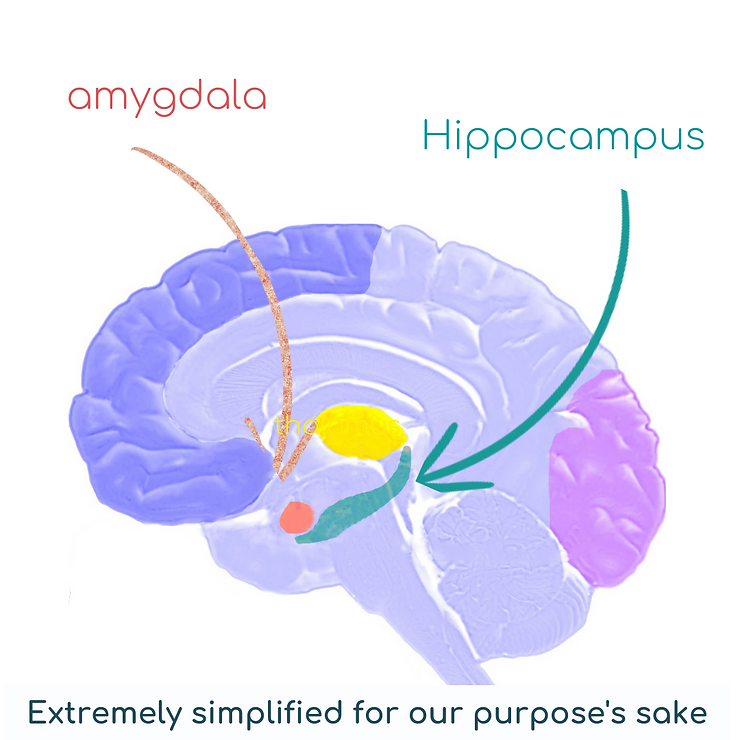
Amygdala : associated with: - emotional responses - memory formation - response to threats (fight or flight)
Hippocampus : associated with: - memory centers of our brains - emotions of the event we memorize - learning and emotions - neurogenesis, new nerve cells are made here from adult stem cells
The limbic system is not a unique structure, but rather a collection of structures involved in processing and regulating emotions, memory formation and storage, learning and desire, and the body's response to stress.
Our mind and body will react in the same way whether the threat is real or whether it's only a perceived threat. Our mind will "go limbic"!

A stressful situation can trigger a cascade of stress hormones that in turn produce a series of involuntary physiological changes such as rapid breathing, increased heart rate, flushed skin, tense muscles, perspiration, and dilated pupils.
With these physiological changes, our body is now ready to react: fight, flight, or freeze.
This is the part of your brain that gets you away from danger. But is speaking a foreign language really danger? Breathe deeply a few times, reason with yourself. Now your prefrontal cortex is back in the game. You can talk. Nothing bad is going to happen. Everything is going to be ok.
Two More Things About the Brain
The first one is Neuroplasticity. Neuroplasticity is the brain's capacity to grow and evolve in response to life experiences.
Our brain has the ability to form or reorganize synaptic connections and it does so all the time, especially in response to learning or experience.
Parts of your brain, like the hippocampus, form new neurons (neurogenesis). Other parts of your brain make new connections between brain cells.
As we age, we have fewer brain cells (neurons) but the neurons we do have still have the ability to form new connections. That means you can no longer say "I can't learn at my age", that's absolutely not true.
And the amazing news is that you can work on improving your brain plasticity. Learning a language is among the most recommended (and proven) ways of improving your brain plasticity.
There's no age limit to learning.
Not being able to find the right word in a foreign language when we want to order something in a restaurant is not a real threat. Objectively speaking, there's no danger whatsoever, and yet, the level of stress it can cause is perceived as such by our brain. Our body goes into full fight/flight/freeze mode.
You know the mode where we can't even say the most basic words anymore. The mode where we just give up and ask our friends to order for us or just point at the menu. That mode.
This typically happens during business meetings too. Perfectly rational people with a very acceptable level of English (their non-native language) will say to me: "I can't find the right word; I can't talk during a meeting as I do when I'm with you." You lose confidence, feel dumb and feel threatened.
While this all happens in a split second, you can do something about it. First and foremost, you can breathe deeply and then, tell your brain who's boss :-D. You can consciously engage your prefrontal cortex and reason yourself out of the feeling of panic.
Neuroscience-based coaching can be very efficient in dismantling self-limiting beliefs, doubts, anxieties, perspectives, and biases to form positive habits, thoughts, perspectives, and actions.
If you need some help getting started on your language goals and overcoming your fears, coaching can be incredibly beneficial. While some of you may require ongoing coaching for an extended period, others may find that just a few sessions are enough to set them on the right track.
By understanding how the brain processes information, regulates emotions, and creates habits, you can develop new ways of thinking, feeling, and behaving that support your learning goals, help you stay calm and boost your confidence.