
The Peacemaker
Source: CP Enneagram Academy - The Ultimate Guide
Key Traits
- Over-Adjustment and Merging. The prominent Type Nine habit of adapting themselves to others' agendas represents an "over-adjustment" because Nines typically don't just meet others halfway, they lose the ability to access what their positions are and give in to others completely, often without anyone knowing they've done it.
- Resignation. At the heart of the Nine's coping strategy of "going along to get along" is their tendency to resign themselves to not getting what they want.
- Indecision. Nines tend to be disconnected from their internal guidance system, so they can experience extreme difficulty when they need to access their desires to make a decision.
- Easygoing Nature / Affability. Although the downside of giving up your desires to go along with the agendas of others is that you become more and more disconnected from yourself, the upside is that people tend to find you likable, pleasant, and easy to be around.
Overview
Type Nine represents the archetype of the person who seeks to harmonize with the external environment as a way of staying comfortable and peaceful, even though this means a loss of contact with their internal environment.
Type Nines are the prototype for that tendency in all of us to tune out our own inner knowing as a way of "going with the flow" and "not rocking the boat." Nines thus represent the prototype for all the personality types of the universal human tendency to go on automatic and remain asleep to ourselves.
In the Enneagram framework, Type Nines are adaptable, likable, and easygoing. They specialize in detecting tension and finding ways to mediate and diffuse conflict. Oriented toward inclusion, consensus, and harmony, they excel at understanding and valuing different perspectives and mediating between them to resolve disputes and maintain peace. They are genuinely caring and unselfish.
As with all the archetypal personalities, however, Type Nines' gifts and strengths also represent their "fatal flaw," as they can overadjust to others and then have a hard time registering their own desires and asserting their own agendas.
Zooming In
Focus of Attention
Nines focus attention on others, on what is going on in the environment, and on avoiding conflict and achieving harmony. Nines typically tune into what other people want, but do not have a clear sense of their own agendas.
Thoughts and Emotions
Nines focus on getting along with others without "rocking the boat" and creating conflict. They're emotionally steady and do not feel many highs or lows. Though they are anger types, Nines usually don't feel their anger very often, they (unconsciously) dissociate from it as a way to avoid conflict or separation from others, so it tends to leak out in repressed forms, such as stubbornness or passive-aggressive behavior.
Behavior Patterns
Nines like to "go with the flow," and they automatically accommodate the agendas of others as a way of unconsciously avoiding expressing (or even registering) any preferences that could lead to conflict, though they may passively resist later when hints of latent desires surface. They dislike feeling controlled, but like structure and clear lines of authority.
Blind Spots
- Their own anger and other feelings that are versions of anger, like frustration and stubbornness
- Their tendency to express anger passive-aggressively when they don't consciously acknowledge it
- Their own desires, agenda, and opinions
- The potential value of conflict
- The need for healthy boundaries with others
When Blind Spots are Integrated
- Become more powerful and direct by getting in touch with anger
- Notice when anger leaks out as passive resistance or passive aggressive behaviors
- Communicate more clearly about what they want and how they feel; take action in service of their own priorities
- Utilize constructive conflict as a way to develop stronger relationships
- Balance connecting with people with boundaries and saying "no"
Passion : Sloth
(dominant emotional drive, fixation, that each type struggles with)
Sloth is the passion that drives Type Nine. As the core emotional motivation of this type, sloth is a kind of laziness, not in the usual sense of not wanting to do things, but rather a reluctance to take important actions for themselves that are needed in the moment. Through sloth, Nines consistently and unconsciously neglect themselves and their potential role in making a difference in the world.
Virtue : Right Action
(higher emotional state, quality, that each type can achieve when healthy and balanced)
Right action is the virtue that provides an antidote to the passion of sloth. When in touch with right action, this type resists giving way to others or putting others ahead of themselves. They realize that they don't have to be overly modest or forget themselves to have value and create harmony. They initiate projects that can change the world, instead of just doing more of the same old operational, routine stuff.
The Path From Sloth to Right Action
The Type Nine paradox is grounded in the polarity between the passion of sloth and the virtue of right action. By becoming more aware of their tendency to stay comfortably invisible and not bring their gifts to the world, they begin to wake up. For this type, being in right action means waking up to how important they are and learning to assert their own priorities.
Type Nine Subtypes
Self-Preservation Nine: Appetite
Instead of feeling an ongoing connection to their feelings, desires, and power, Self-Preservation Nines focus on merging with physical comforts and routine activities, such as eating, sleeping, reading, or doing crossword puzzles. SP Nines are practical, concrete people who focus on everyday things rather than abstractions.
Social Nine: Participation (Countertype)
Social Nines merge with groups. They act out laziness when connecting with their own inner life by working hard to be a part of the different groups in their lives. Fun-loving, sociable, and congenial characters, Social Nines can be workaholics, prioritizing the group's needs above their own.
Sexual Nine: Fusion
Sexual Nines express the passion of laziness by fusing with the important people in their lives. Sexual Nines unconsciously take on the attitudes, opinions, and feelings of others, because it can feel too hard to stand on their own. These Nines tend to be kind, gentle, shy characters who are not very assertive.
Growth Path
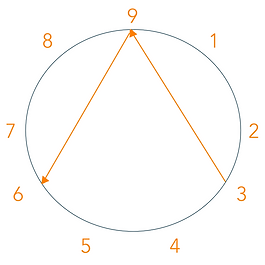
Moving back to Type 3
The path of growth for Type Nines calls for them to reclaim their ability to actively "do" to further their own goals. "Moving back to Three" can be a way of re-engaging with their lost sense of initiative and self-interested action and can free Nines up to move forward on their growth path toward the Six Point.
Moving ahead to Type 6
The Inner Flow growth path for Type Nines brings them into direct contact with the challenges embodied in Type Six: allowing for a clearer perception of fears, anxieties, thoughts, and feelings about what might go wrong as a way to motivate action and mobilize the inner resources of faith and courage. Moving to Six can help Nines find reasons to act on their own behalf.
As Nines work on themselves and become more self-aware, they learn to escape the trap of creating discomfort and disharmony by erasing themselves in an attempt to create peace and harmony. By creating a stronger connection to their own inner world, asserting their needs and wants, and acting more powerfully on their own behalf, they can avoid their tendency to overadjust to others.
Using the Enneagram for Growth
The first steps involve observing yourself to make the patterns and habits associated with your main, or "core," type more conscious. After you have done this for a while, you can create further growth shifts by using the arrows as pathways for growth.
- The point behind (moving back) our core type along the arrow lines represents issues from the past that we need to re-integrate.
- The point ahead (moving forward) of our core point represents key challenges we need to master to become more whole.