The Epicure
Source: CP Enneagram Academy - The Ultimate Guide
Key Traits
- Self-Referencing. In Type Sevens, the focus of attention is the Seven's own inner experience, their thoughts, preferences, desires, needs, and feelings.
- Positive Reframing / Optimism. Habitually oriented to keeping their mood upbeat, and automatically attentive to "the bright side," they are relentlessly optimistic; they easily reframe negatives into positives without much conscious effort.
- Hedonism. In the Seven's focus on hedonism, the goal of a pleasure-filled life rationalizes the avoidance of suffering.
- Rebelliousness. Given that Sevens want to do what they want to do when they want to do it, like their fellow head-based types, they are essentially anti-authoritarian.
- Lack of Focus / Discipline. Type Seven tendency to avoid limits also leads to difficulty in maintaining focus and self-discipline.
Overview
Type Seven represents the archetype of the person who seeks pleasure in different forms as a distraction from the discomfort, darkness, and downside of life. This archetype's drive is to defend against the experience of pain using intelligence, imagination, charm, and enthusiasm, and to avoid fear through an optimistic outlook.
The Jungian concept of the "puer" or the "divine child" is another form of this archetype. It represents a "symbol for future hopes… frivolity, pleasure, and play." Jung characterizes this archetype as the "Eternal Child," who resists growing up as a way of trying to avoid taking on responsibility.
Pain is part of what motivates the desire for personal development, and conscious suffering represents a key part of the growth process. For any of us to become all that we can be, we have to find the courage to see wisdom and truth in the darkness as well as the light. This hard truth is what the Seven's path of growth teaches us.
As with all the archetypal personalities, however, Type Sevens' gifts and strengths also represent their "fatal flaw," as their talent for reframing "negatives" into "positives" can cause them to ignore important data that doesn't fit their positive frame.
Zooming In
Focus of Attention
Type Sevens avoid unpleasant feelings by focusing on what feels pleasant and by keeping the mood upbeat to the point of reframing negatives into positives. A fear of being trapped in discomfort fuels quick thinking, creative problem-solving, and a focus on positive future possibilities.
Thoughts and Emotions
Type Sevens have quick, synthesizing minds, with which they find links between the commonalities in different subjects, making rapid mental associations. Emotionally, Sevens like feeling happy or joyful emotions and dislike feeling fear, anxiety, sadness, boredom, pain, or discomfort.
Behavior Patterns
Sevens are energetic, fast-paced, innovative, and active. They usually have many interests and activities, which they pursue with enthusiasm. Sevens like planning for fun and maintaining many options, so they can keep their mood up and shift to the most pleasant option if one plan becomes undesirable.
Blind Spots
- Focus on pleasure as a way of avoiding pain and so may inadvertently create more pain (or problems) through avoiding it
- The negative data inherent in a situation
- Their deeper emotions related to discomfort and anxiety
- What's meaningful in the present moment (vs. living in the future)
When Blind Spots are Integrated
- Embrace the experience of pleasure as well as pain as the experience of living
- Develop the ability to tolerate discomfort and limitation as valuable indicators of what's real
- Understand that it's just as problematic to focus only on the positive data as it would be to see only what's negative
- Slow down and sink more into the present moment without distractions
Passion : Gluttony
(dominant emotional drive, fixation, that each type struggles with)
Gluttony is the passion that drives Type Seven. It fuels the desire to experience pleasure without limits, to taste a little bit of every experience, and to stay open to myriad possibilities. Gluttony can be understood as a passion for variety, not just over-indulgence in food and drink.
Virtue : Sobriety
(higher emotional state, quality, that each type can achieve when healthy and balanced)
Sobriety is the virtue that provides an antidote to Type Seven gluttony. Sobriety helps this type appreciate sticking with an experience all the way through to the end. In this context, it means reducing excess movement and coming to stillness. Sobriety offers this type a clear goal to work toward after consciously observing their gluttony.
The Path From Gluttony to Sobriety
The Type Seven paradox arises from the polarity between the passion of gluttony and the virtue of sobriety. By becoming more aware of how gluttony operates, they learn to say "no" to lesser priorities and focus on one thing at a time. They develop the capacity to be more present and still.
Type Seven Subtypes
Self-Preservation Seven: Keepers of the Castle
The Self-Preservation Seven expresses gluttony through making alliances and creating opportunities for gaining an advantage. Pragmatic and self-interested, these Sevens find safety through networking and being alert to opportunities that support their survival. Cheerful and amiable, they have a love of pleasure and tend to get what they want.
Social Seven: Sacrifice (Countertype)
As the countertype, Social Sevens go against gluttony through conscientious efforts to be of service to others. Conscious of wanting to avoid exploiting others, they have a need to be good and pure and to sacrifice their own needs in supporting the needs of others. They express an ascetic ideal and make a virtue of getting by on little.
Sexual Seven: Suggestibility
Sexual Sevens express gluttony through a need to imagine something better than ordinary reality. Gluttons for things of a higher world, they are idealistic dreamers with a passion for living in their imaginations. "Suggestibility" refers to being somewhat naive and easy to hypnotize. Light-hearted and enthusiastic, they focus on exciting possibilities and pleasurable fantasies.
Growth Path
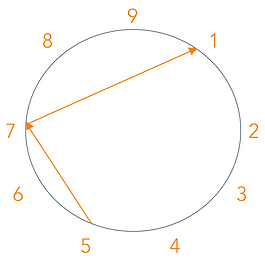
Moving back to Type 5
The path of growth for Type Sevens calls for them to reclaim healthy restraint and the ability to withdraw and reflect that is characteristic of Type Five. Consciously drawing on the high side of the Five Point can help them find a healthy way to be more internal and more involved in their thoughts in a less manic way.
Moving ahead to Type 1
The Inner Flow growth path for Type Sevens brings them into direct contact with the challenges embodied in Type One: allowing for a clearer perception of what is ideal and "right" in a larger sense as a way of stabilizing a focus on taking action in service of a higher good. Sevens can be inspired by the high side of the One Point in ways that both help them express their impulse toward creative invention and ground what they actually do in larger notions of the "good" or the "perfect."
As Sevens work on themselves and become more self-aware, they learn to escape the trap of pursuing more superficial pleasures and avoiding the enjoyment of a deeper experience of themselves. They do this by slowing down and allowing themselves to be present, appreciating the value of their fear and their pain, and finding the joy in personal connections that comes when they connect with their own depths.
Using the Enneagram for Growth
The first steps involve observing yourself to make the patterns and habits associated with your main, or "core," type more conscious. After you have done this for a while, you can create further growth shifts by using the arrows as pathways for growth.
- The point behind (moving back) our core type along the arrow lines represents issues from the past that we need to re-integrate.
- The point ahead (moving forward) of our core point represents key challenges we need to master to become more whole.