
The Contrarian
Source: CP Enneagram Academy - The Ultimate Guide
Key Traits
- Hypervigilance. The Six individual is motivated to frequently be "on alert" to signs of danger and threats.
- Theoretical Orientation. The Six lives in the realm of intellect, not only as a method of solving problems but also as a way of "problem-seeking" in an attempt to feel safe.
- Orientation to Authority. Sixes live in a hierarchical world, and they both love and hate authorities, reflecting the early experience of both loving a parent and hating being dominated or somehow punished by that same parent.
- Doubt and Ambivalence. Built in to the way a Six thinks is a tendency to doubt and question nearly everything. This reflects both an anxiety about the intentions of others and a need to feel secure through testing and mentally evaluating people and ideas.
- Contrarian Thinking. As a way of looking for the right answer and defending against heedlessly accepting someone else's power to dominate, when Sixes hear a statement or an opinion, they often automatically speak to the other side.
Overview
Type Six represents the archetype of the person who, given the fear of impending threat, seeks to find safety through the protection of others or by taking refuge in their own strength. The drive of this archetype is to scan for danger in a scary world and defensively manage fear and anxiety through fight, flight, or friends.
Type Sixes are thus the prototype for that tendency in all of us that needs to find a sense of security in the world in the face of the fears that naturally arise as part of being human. As part of the foundational inner triangle of the Enneagram, the Six Point represents a basic step in the path of transformation we all must take in order to transcend the ego.
The Six archetype, like the widely known phrase "fight or flight," illustrates the basic range of normal human reactions to fear. In the three Type Six subtype personalities, we see how three basic, but distinct, responses to fear shape the personality.
Zooming In
Focus of Attention
Sixes focus on thinking about what might go wrong and strategizing and preparing for it. A response to an early experience of danger, Sixes have an adaptive strategy that centers on detecting threats and coping with fear.
Thoughts and Emotions
Analytical and strategic in their thinking, Sixes think in terms of how to manage uncertainty to feel safe. They think things through thoroughly, even to the point of getting paralyzed by overanalysis. Aside from fear, they tend to have less access to other feelings, though they can be the most feeling of the Head Types.
Behavior Patterns
Sixes have a strong desire for a good authority, but can be suspicious of and rebellious against real-life authorities. They can be hard workers, intent on control and achievement, or they can have a hard time getting things done, getting caught up in procrastination, indecision, and fear of success.
Blind Spots
- their fear and how it drives their behavior
- their own power
- projecting fears onto others and assuming ill intent in relationships
- what's working well
- faith that things will work out
When Blind Spots are Integrated
- create a deeper understanding of their fears and therefore are able to take courageous intentional action in the face of them
- stop projecting power and authority onto others and own it more themselves
- see both problems and opportunities, be decisive, and take action in a timely manner
- balance healthy skepticism with more faith and trust
Passion : Fear
(dominant emotional drive, fixation, that each type struggles with)
Fear is a universal emotion central to assuring survival in all animals, and it's the passion of Type Six. As the emotional passion that gives shape to the Six personality, fear can take many forms and can be more or less conscious. It can take the form of a fear of the unknown; it can motivate anxiety and obsessive worrying about potential threats to well-being; or it can feel like self-doubt and uncertainty.
Virtue : Courage
(higher emotional state, quality, that each type can achieve when healthy and balanced)
Courage is the virtue that provides an antidote to the Type 6 passion of fear. Through courage, Sixes keep their hearts open in the face of anything that is happening (or may happen), and calmly but decisively take their next steps forward. They have a deep sense of confidence in their capacity to handle any challenge that comes their way.
The Path From Fear to Courage
The Type Six paradox arises from the polarity between the passion of fear and the virtue of courage. By becoming aware of all the ways fear operates, this type opens up to experimenting with new ways of living and develops the capacity to go into action with their hearts open.
Type Six Subtypes
Self-Preservation Six: Warmth
Self-Preservation Sixes express the passion of fear through a need for protection, for friendship, and for banding together with others. This most "phobic" of the Sixes has difficulty expressing anger, feels uncertain, and engages in a lot of self-doubt. For SP Sixes, fear manifests as insecurity, and they focus on relationships as a way of feeling safer in the world.
Social Six: Duty
Social Sixes express fear through a need to deal with anxiety by relying on abstract reason or ideologies as a frame of reference. Obeying authority through knowing the rules helps them to feel safe in the world. Social Sixes focus on precision and efficiency and adhere to whatever the guidelines are as a form of having a protective authority.
Sexual Six: Strength (Countertype)
Sexual Sixes express fear by going against fear, by becoming strong and intimidating. Trusting themselves more than others, these Sixes have the inner programming that when you are afraid, the best defense is a good offense. Their anxiety is allayed through skill and readiness in the face of an attack.
Growth Path
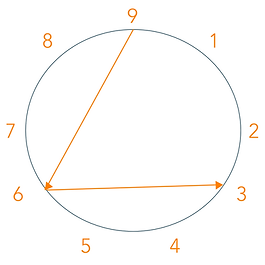
Moving back to Type 9
The path of growth for Type Sixes calls for them to reclaim their ability to relax in their connections with others and go with the flow of life without having to worry about threats in the environment. Navigated consciously, a Six can use the "move to Nine" developmentally by establishing a healthy balance between watching out for dangers and being able to relax in the security of supportive relationships.
Moving ahead to Type 3
The Inner Flow growth path for Type Sixes brings them into direct contact with challenges embodied in Type Three: developing an ability to use goals and relationships as supports to overcome fear, take action, and achieve results. By engaging the Three Point in a conscious way, Sixes can work against the fears that hold them back.
As Sixes work on themselves and become more self-aware, they learn to escape the trap of intensifying their fear by doing the following: seeking to embody faith and courage, becoming aware of how they create self-fulfilling prophecies, learning to trust themselves (and others) more, and owning their power and authority instead of projecting it out onto others.
Using the Enneagram for Growth
The first steps involve observing yourself to make the patterns and habits associated with your main, or "core," type more conscious. After you have done this for a while, you can create further growth shifts by using the arrows as pathways for growth.
- The point behind (moving back) our core type along the arrow lines represents issues from the past that we need to re-integrate.
- The point ahead (moving forward) of our core point represents key challenges we need to master to become more whole.