
The Helper
Source: CP Enneagram Academy - The Ultimate Guide
Key Traits
- Strategic Helpfulness to Create Indispensability. This strategic giving to get represents a key unconscious habit of the Two.
- Seductiveness. Because it is so difficult for Twos to ask directly for what they need, they seduce others as a way of getting what they need through the indirect routes of charm and apparent generosity.
- Emotionality and Emotional Sensitivity. Twos are naturally emotionally sensitive yet struggle with emotionality, the outward manifestation of their feelings.
- Romanticism. Twos have a deep need for love. Together with their focus on relationships, this gives them an affinity for all things romantic, whether it is a good love story, fantasies of fulfilling experiences, music, poetry, etc.
- Hedonism or Compensatory Overindulgence. Type Two's hedonism derives from the unmet need for love and support that they experienced early in life.
Overview
Type Two represents the archetype of the person who seeks to please others as a way to evoke affection. The drive to win others' approval through indirect methods, such as seduction and strategic giving, is a way to obtain emotional and material support without having to ask for it.
Twos can be of either gender, of course, but the Type Two archetype mirrors the Jungian concept of "anima," or the inner feminine. Related to the Great Mother archetype, the archetypal feminine principle represents fundamental human ideas about warmth, receptivity, softness, emotional sensitivity, and openness to the other.
Type Twos are thus the prototype for that part in all of us that adopts an elevated or idealized view of ourselves and our ability to make others like us. The natural strengths of Type Twos include their genuine ability to listen to others, empathize with their feelings, and meet their needs. They are usually cheerful, optimistic, warm, and friendly.
As with all the archetypal personalities, however, Type Twos' gifts and strengths also represent their "fatal flaw" or "Achilles heel." Their focus on appearing to be powerful enough to "do anything" for others leads to self-inflation. This inflation is a form of pride, the passion of the Two.
Zooming In
Focus of Attention
Twos focus on others' feelings, needs, and desires, and on how to respond to them in ways that will create connection and earn approval. They focus attention on relationships and on getting others to like them.
Thoughts and Emotions
Twos think in terms of how to relate to people, how to make people respond positively to them, and how to find ways to meet the needs of others. They feel sadness when they don't feel appreciated, and they can feel resentment when they give more than they receive.
Behavior Patterns
Twos can be warm, caring, and generous, sometimes to an excessive degree. They tend to focus on others more than on themselves and can overextend themselves doing things for others as a way of earning love.
Blind Spots
- their own needs
- the ways they manipulate others to get love
- the degree to which they deny their feelings
- the indirect methods they use to get what they need
- pride
When Blind Spots are Integrated
- become more honest about their own needs
- ask directly for what they want
- value themselves independent of others' approval
- balance giving with receiving
- relate to others without an ulterior motive
Passion : Pride
(dominant emotional drive, fixation, that each type struggles with)
Pride for Twos has a specific meaning: it is an unconscious denial of their needs combined with an exaggerated focus on their ability to meet others' needs. It grows out of an early experience of having to take care of others and deny their own needs to feel worthy of love.
Virtue : Humility
(higher emotional state, quality, that each type can achieve when healthy and balanced)
Humility for Twos means recognizing their needs and being honest about who they are without needing to inflate their self-image. It means relating without an agenda, giving and connecting without needing anything back.
The Path From Pride to Humility
When Twos develop a deeper awareness of their own pride and its effects, they can begin to acknowledge the ways they manipulate others through giving. By learning to value themselves and their needs equally with the needs of others, they develop greater integrity, authenticity, and real generosity.
Type Two Subtypes
Self-Preservation Two: Privilege (Countertype)
Self-Preservation Twos "seduce" like a child in the presence of grown-ups as a way of (unconsciously) inducing others to take care of them. The title "Privilege" reflects this Two's desire to be loved and prioritized just for being who they are, not for what they give to others. These Twos are playful, irresponsible, and charming.
Social Two: Ambition
The Social Two is a seducer of environments and groups, a powerful, leader type whose pride manifests as a sense of satisfaction in the conquest of an audience. This is a more adult Two in whom pride is the most obvious; the Social Two cultivates an image of being an influential, super-competent person worthy of admiration.
Sexual Two: Seduction-Aggression
Sexual Twos seduce specific individuals as a way of getting needs met and feeding their pride. Similar to the "femme fatale" archetype (and male equivalent), this Two employs the methods of classical seduction to attract a partner who will meet all their needs.
Growth Path
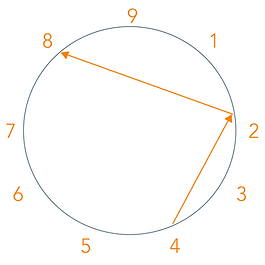
Moving back to Type 4
The path of growth for Twos calls for them to reclaim their needs and feelings as represented by the Four Point. By consciously drawing on the strengths of Type Fours, Twos can expand their access to their authentic emotions, reclaim a healthy ability to self-reference, and accept and express their needs with more confidence.
Moving ahead to Type 8
Type Twos' Inner Flow growth path brings them into direct contact with the challenges embodied in Type Eight: owning their power and authority, allowing for more access to anger, and handling conflict and confrontation more consciously. Incorporating healthy Type Eight behaviors can provide a much-needed balance to Twos' habit of getting needs met covertly through seduction, charm, and strategic helpfulness.
For Type Twos, the first stage of awakening involves actively and consciously observing how they tune in to others' feelings more than their own. As a Type Two, your growth journey starts with developing the capacity to recognize how much attention you give to others and how little attention you pay to your own priorities, without judging yourself.
Using the Enneagram for Growth
The first steps involve observing yourself to make the patterns and habits associated with your main, or "core," type more conscious. After you have done this for a while, you can create further growth shifts by using the arrows as pathways for growth.
- The point behind (moving back) our core type along the arrow lines represents issues from the past that we need to re-integrate.
- The point ahead (moving forward) of our core point represents key challenges we need to master to become more whole.