
The Perfectionist
Source: CP Enneagram Academy - The Ultimate Guide
Key Traits
- Inner Critic. Having an inner critic that operates almost all the time.
- Over-control. Controlling or over-controlling themselves to the point of being or seeming rigid or overly focused on being correct or appropriate.
- Virtuousness. Ones try to be good and do the right thing almost all the time.
- Perfectionistic or Reform-minded. Ones are improvement-oriented, they try to perfect everything they do. They can easily see how things could (or should!) be reformed or made better.
- Criticality. Ones can be critical of themselves and others. They can tend to be judgmental, even while they may try to control the expression of their criticality (in the effort to be virtuous) or fail to notice its impact.
- Repression of Anger. Although they sometimes don't want to see or admit it, Ones tend to be angry about the fact that things aren't always the way they think they should be. Then they try to repress this anger because they may believe it's not appropriate or virtuous to be angry. Then it leaks out as annoyance, resentment, irritation, or righteous indignation.
Overview
Type One represents the archetype of the person who seeks to be good and "do the right thing" to satisfy an urgent need to be virtuous and responsible and to avoid fault and blame. This drive provides a defensive protection in a world that demands and rewards good behavior and punishes bad behavior.
This archetype also exists as the "superego," that part of the psyche that stands in for the parental voice of authority. This internal force exercises its power to tame the excesses born of raw impulses, animal instinct, and unrestricted forms of self-interested self-expression.
Type Ones are thus the prototype for that part in all of us that strives to match high standards of good behavior as a way of proving ourselves worthy and avoiding blame or fault. This archetypal stance prioritizes following the rules as a way of bringing about a perceived higher good through invoking a higher order.
Type One individuals are reliable, responsible, honest, well-intentioned, conscientious, and hardworking. They sincerely want to improve themselves and the world around them. Their specific "superpower" can be seen in their high integrity and the passion and dedication they bring to the fulfillment of their ideals and the pursuit of high standards.
As with all the archetypal personalities, however, Type Ones' gifts and strengths also represent their "fatal flaw" or "Achilles heel:" they get in their own way by overdoing their focus on virtue and thus undermine their own self-confidence, balance, and inner peace through over-control, self-repression, and excessive judgment.
Zooming In
Focus of Attention
Ones focus on noticing error (in the form of deviations from an internally generated ideal), discerning right and wrong, and displaying a reliance on rules and structure. They see whatever is happening in terms of detecting and conforming to what is right or appropriate.
Thoughts and Emotions
Emotionally, Ones often feel resentment and irritation, or anger that is restrained. The communication of aggression is in conflict with their belief that expressing anger is bad, so anger and other instinctual impulses are typically held back. They then leak out as resentment, annoyance, criticism, and self-righteousness.
Behavior Patterns
Ones can be perceived as being rigid and highly structured in their behavior, relying on ritual and repetitive forms of doing things. Typically, they follow the rules and are reliable, ethical, and hardworking.
Blind Spots
- anger and its effects
- the impact of criticism
- feelings and impulses
- the downsides of the pursuit of perfection
- rigidity
- need for relaxation
When Blind Spots are Integrated
- are more relaxed and flexible
- display humor and lightness
- make time for fun
- are more accepting of their feelings and needs
- are less judgmental
- accept and channel their anger consciously
Passion : Anger
(dominant emotional drive, fixation, that each type struggles with)
As an emotional passion, anger appears in its repressed form for Ones as resentment that seeks resolution in pursuing perfection and virtue. Ones display hostility toward the imperfect way things are and try to force things to conform to their ideal of how things should be.
Virtue : Serenity
(higher emotional state, quality, that each type can achieve when healthy and balanced)
Serenity can be understood as a state of being totally peaceful within, while fully accepting the way people and things are. In Serenity, Ones feel no need to go against what happens or against the impulses they experience.
The Path From Anger to Serenity
The paradox underlying the Type One personality patterns centers on the tension, or the opposition, between the passion of anger and the virtue of Serenity. Another way of viewing this polarity is that the experience of one pole is a preoccupation with self-judgment and striving to be good, and the other pole is a state of acceptance and inner peace, free from the activity of the judging mind.
Type One Subtypes
Self-Preservation One: Worry
Self-Preservation Ones are the true perfectionists of the three Ones. They express the passion of anger through working hard to make themselves and the things they do more perfect. In this subtype, anger is the most repressed emotion; the defense mechanism of reaction formation transforms the heat of anger into warmth, resulting in a friendly and benevolent character.
Social One: Non-Adaptability
Social Ones (unconsciously) consider themselves to be perfect; they express anger through focusing on being the perfect model of "the right way" to be. They have a teacher mentality that reflects an unconscious need for superiority. In the Social One, anger is half-hidden, there's a transformation of the heat of anger into cold. This is a cooler, intellectual personality type in which the main theme is control.
Sexual One: Zeal (Countertype)
Sexual Ones focus on perfecting others; they are more reformers than perfectionists. The only One who is explicitly angry, they act out anger through their intense desire to improve others and get what they want. They feel entitled in the way a reformer or a zealot can feel entitled: they believe they have a right to change society and get what they want because they have a higher understanding of the truth and the reasons behind "the right way to be."
Growth Path
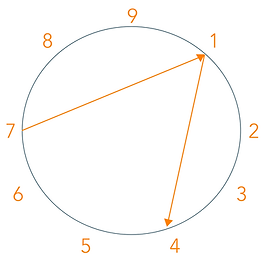
Moving back to Type 7
The path of growth for Type Ones calls for them to reclaim the playful and spontaneous impulses characteristic of Type Seven. Ones often had the experience in childhood that non-serious pursuits like free imagination and play were not okay. Navigated consciously, a One can use "the move to Seven" developmentally to re-establish a healthy balance between responsibility and relaxation.
Moving ahead to Type 4
After doing the work of integrating healthy Type 7 qualities, the Inner Flow growth path for Type Ones brings them into direct contact with the challenges embodied in Type Four: allowing for greater range and depth of feeling, more melancholy and longing, and greater creativity and self-expression (instead of just following the rules). The One working consciously in this way can make ready use of the tools healthy Type Fours use: artistic expression and emotional authenticity.
If you are a Type One, the first stage of your path of awakening involves learning to observe yourself more consciously. This means developing the ability to notice your specific habits of judging yourself and others, without judging yourself further for judging.
Using the Enneagram for Growth
The first steps involve observing yourself to make the patterns and habits associated with your main, or "core," type more conscious. After you have done this for a while, you can create further growth shifts by using the arrows as pathways for growth.
- The point behind (moving back) our core type along the arrow lines represents issues from the past that we need to re-integrate to ground and support our forward movement.
- The point ahead (moving forward) of our core point represents key challenges we need to master to become more whole.