
Bilingual news and shares about the brain, languages and coaching
Newsletter 22- Habits

Newsletter 22- Habits
"Motivation gets you started, habit keeps you going." - Jim Rohn
Last time, we dove into the world of habits and how our brains master the art of turning actions into automatic routines. Missed out?Catch up with a quick click here!
Now, let's explore how habits can transform your language learning journey. Although there are many different dimensions to your language learning, there are 2 things that are inevitable, and both are linked to habits: consistency and repetition.
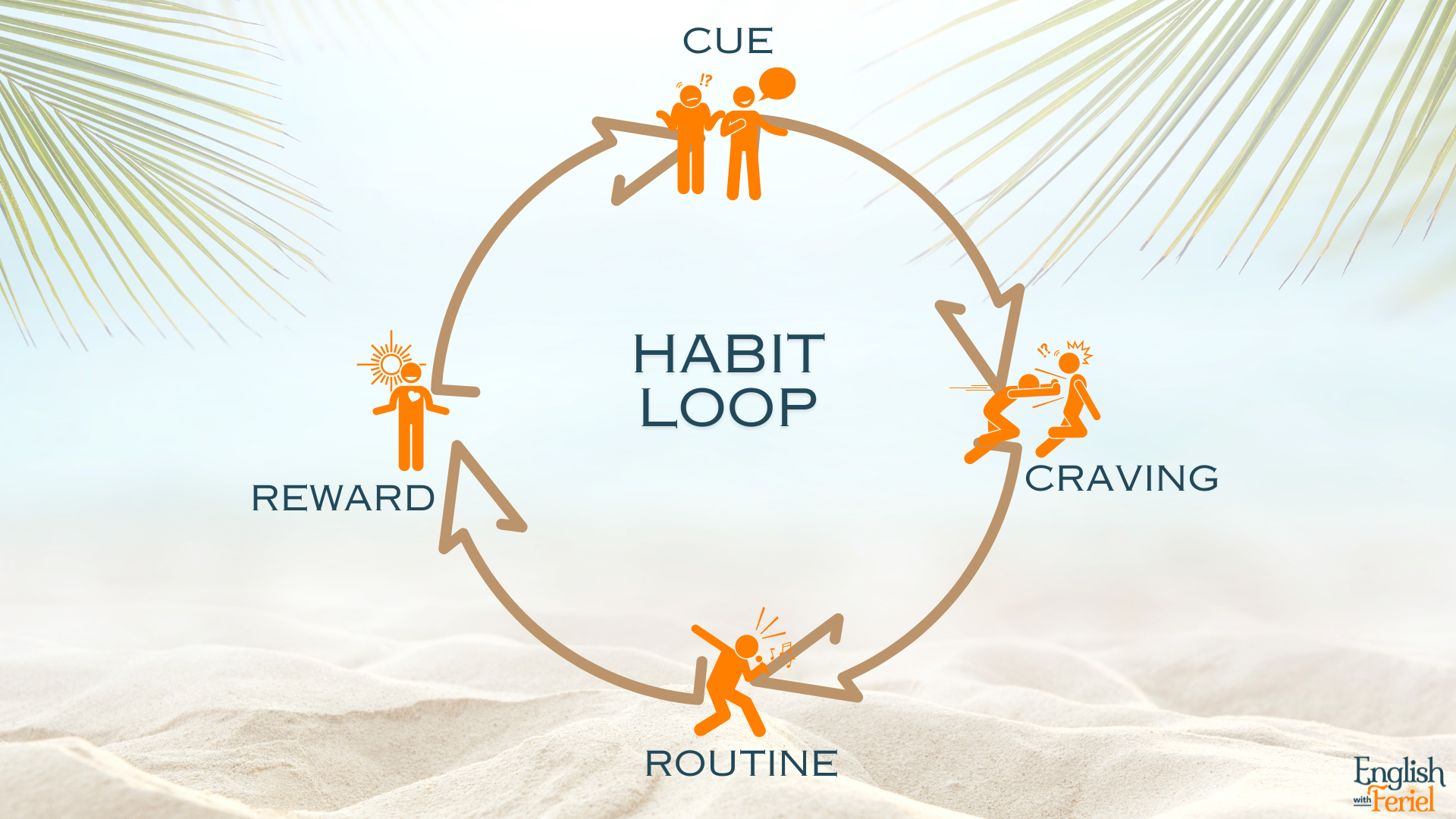
Recap of what’s a habit loop
-
Cue: a trigger that initiates a behavior
-
Cravings: why you have a habit or why you want to put one in place
-
Response: the actual habit
-
Reward: the satisfaction you get from the habit
Let’s look at 2 examples
In the first one,the cue is something that already happens every day,you can use that as a trigger to put in place a new habit:
-
Cue:another meeting in English during which no one made an effort for you to understand and during which you were to shy to speak up
-
Craving:progressing in english and getting the frustration out of your system
-
Routine:Putting your headphones on and listening to a song in English on your way home - even singing along if possible
-
Reward:Learning new words/expressions with an added bonus of getting home nice and relaxedthanks to the magic of music (read about it here)
In the second example,you decidewhat your cue is going to be:

-
Cue:You set your alarm to 8:00 am every morning (and make yourself a coffee!)
-
Craving:Being able to actively take part in meetings in English
-
Routine:Spending 5 minutes working on your English
-
Reward:Expanding your vocab and maybe even impressing a few folks in meetings
Consistency
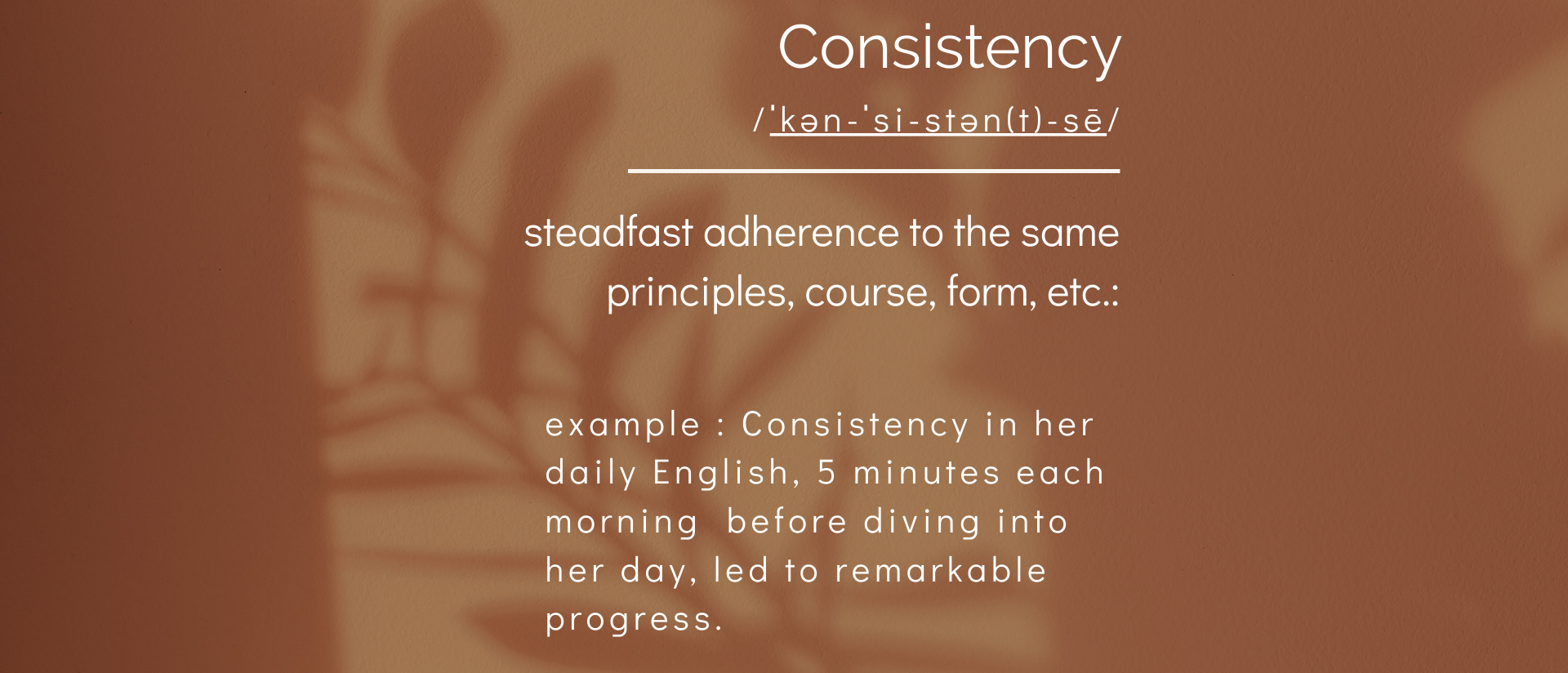
Consistency is the real engine propelling you forward in your language journey. No matter how you prefer to learn - reading, watching TV shows, doing exercises or a mix of activities - the key lies in regular, methodical application. There’s no way around it.
Establishing habits - even if it's just a single 5-minute practice a day - sets you on the road to consistency. Every day, by repeating your efforts, you solidify your neural connections.
The magic of consistency lies in its ability to transform effort into habit, and then into skill. Through repetition, what seemed complex becomes natural, what was difficult becomes easy.
Spaced Learning
Spaced learning is based on repetition and fits right into our habit loop. This technique, which spaces revisions at regular intervals, allows for the information to be deeply anchored in memory. For example, a word learned today will be reviewed several times at increasingly longer intervals until you know it and no longer need to learn it, thus facilitating its long-term assimilation. Lots of you are already onto this with apps like DuoLingo for example.
Incorporating a language learning habit in your daily routine is not easy. Coaching definitely helps keeping you motivated and on track. We’ll talk about that in the next newsletter.
However if you’ve got a strong will power and motivation, you'll find that through a consistent habit and spaced learning, language learning becomes less of a chore and more like second nature. A piece of your everyday life, seamlessly blended in.
If you want to know more about the neuroscience of habits,you should click here
And if you want to go back on my past newsletters that cover all kinds of brain related, language related, coaching related fascinating subjects, I suggest yougo to my newsletters webpage
Links & Resources