
Bilingual news and shares about the brain, languages and coaching
Newsletter 9 - Back to Basics

Newsletter 9 - Back to Basics
“The brain is wider than the sky”“Le cerveau est plus spacieux que le ciel ”
― Emily Dickinson
This week I've decided to go back to basics: why and how can neuroscience help with your language learning?
Here's a (very) brief and (very) simplified overview of the brain and a quick zoom on the parts of the brain that are most interesting in language learning (and speaking!) situations.
The more aware you are of how your brain reacts to situations, the better you can “hack” it to:
-
learn better (and possibly faster)
-
manage and rationalize stressful situations (when you have to speak the language and things don't go the way you wish or imagine).
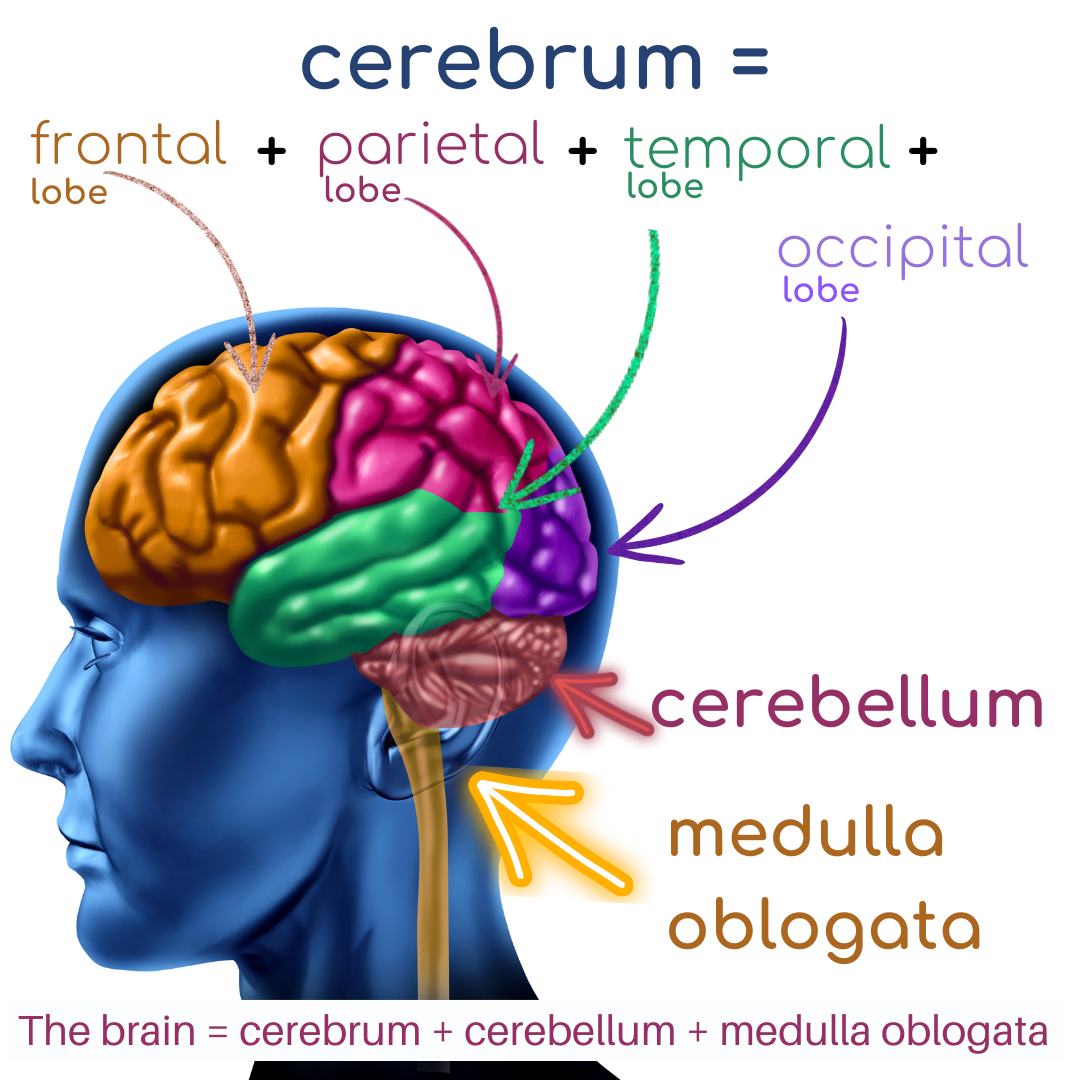
The brain
-
the cerebrum (learning, memory, interpretation, personality)
-
the cerebellum (movement, balance, coordination)
-
the medula oblongata (breathing and blood pressure)
The cerebrum has 2 hemispheres, each made up of 4 parts
-
the frontal lobe
-
the temporal lobe
-
the parietal lobe
-
the occipital lobe
The limbic system
-
processing and regulating of emotions
-
memory formation and storage, learning, desire
-
the body’s response to stress
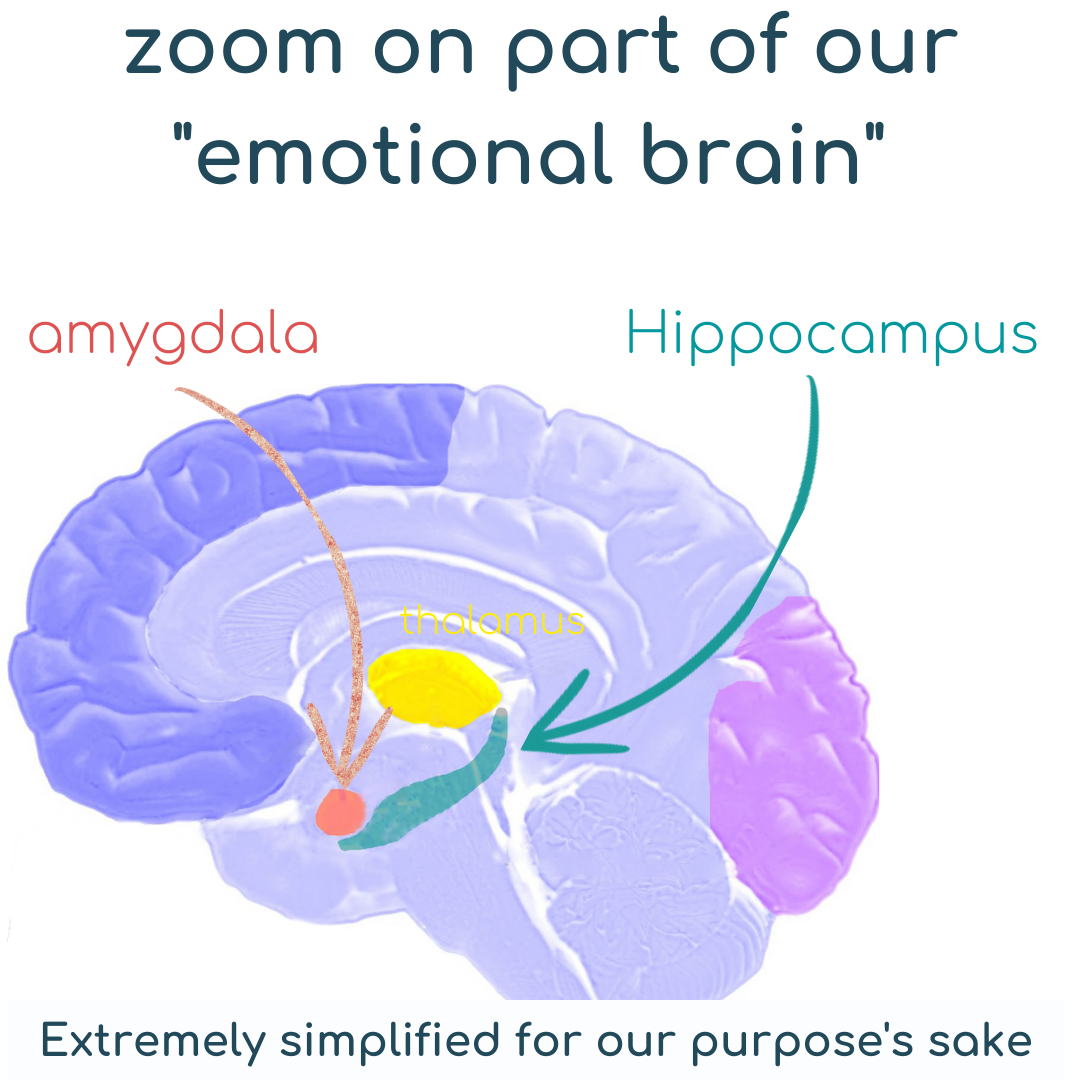
While scientists don't agree on all the structures that make up the limbic system, the 2 following are agreed on (1 of each in each of the 2 lobes):
Amygdala
-
emotional responses
-
memory formation
-
response to threats (fight or flight)
Hippocampus associated with
-
memory centers of our brains.
-
emotions of the event we memorize
-
learning and emotions
-
neurogenesis, new nerve cells are made here from adult stem cells
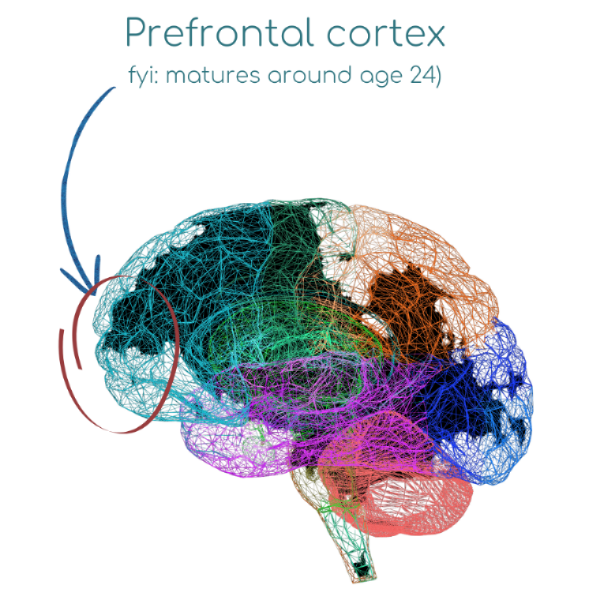
The prefrontal cortex (PFC)
one of the last brain regions to mature (the brain may be done growing in size, but it does not finish developing and maturing until the mid- to late 20s)!
Critically important role in executive functions:
-
self-control.
-
planning
-
decision making
-
problem solvings.
“One general model of PFC function is that it receives sensory information about the external world, uses that information to plan responses, and then communicates with other areas of the brain to enact a response”
(from the 2-Minute Neuroscience: Prefrontal Cortex youtube video)
Emotions, fear, anxiety, memory, learning, planning, controlling…see where I'm going with that?
Lets find out in next week's newsletter ;-)
If you're curious about my sourcesyou should click here
And if you want to go back on my other newsletters that cover all kinds of brain related, language related, coaching related fascinating subjects, I suggest you go tomy newsletter webpage